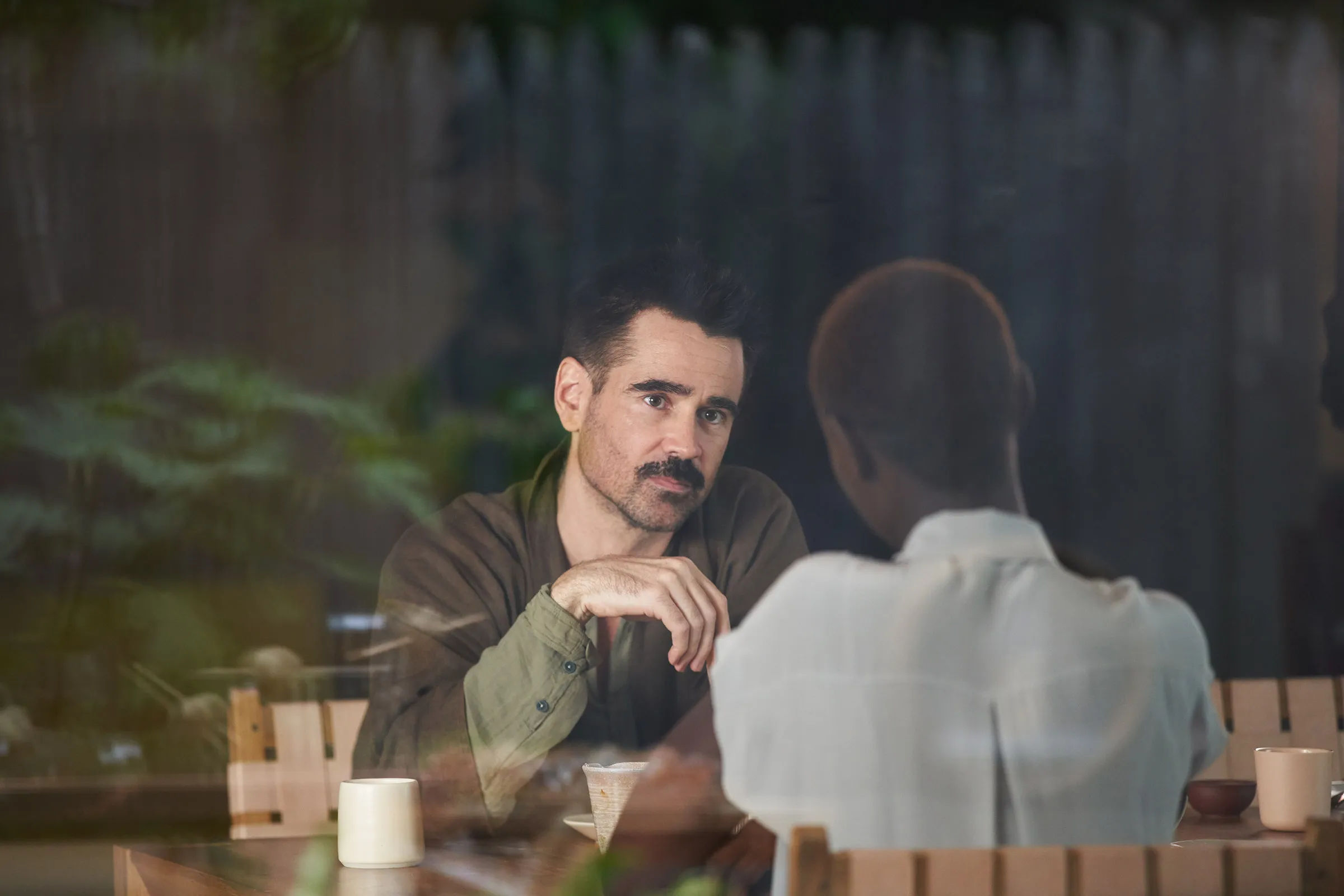
Kogonada’s 2021 film After Yang, inspired by the short story “Saying Goodbye to Yang,” is a deceptively beautiful film. This film had been atop of my watchlist on Letterboxd for quite some time, and with some help from a professor of mine, I finally got around to watching it. This was also my first venture into Kogonada and his work, which, not to give anything away, is the cherry on top.
After Yang follows a man named Jake and his family as their android companion, Yang, malfunctions during a family game. Jake, played by Colin Farrell, seeks to find help for Yang and return him home. In doing so, Jake comes to terms with several insecurities and becomes closer to his wife and daughter.
I was excited to watch this film after reading the short story. The story, in my opinion, is a very well-written story about a grieving man and his family. It asks important questions about grief and what it means to be human. I was interested to see how these themes would translate to the screen, as well as particular moments. I was, for the most part, disappointed immediately after my viewing of the film. I found it not loyal enough to the source material, and despite the performances, just average. So I went to bed. At least, I tried to.
Something kept nagging at me that night. I couldn’t shut my brain off; the only thing I was thinking about was this film. I thought of the world-building, the technology, the family dynamic, the struggles of man reflected in Jake, and so much more. Once I managed to get to sleep, I awoke with a completely different feeling toward the film. I wound up appreciating the film for the direction it took, and its divergence from the source material. I found it beautiful, frankly. I couldn’t keep my mind off of three aspects of the film: the cinematography, the world, and the human.
Most prominent in any film is the cinematography, and this film is beautiful. Each frame feels meticulously blocked to tell its own story alongside the main narrative that unfolds. The way the film depicts phone calls is distinctive and interesting, and the camera movement, while restrained, is everything it needs to be. A moment that continues to stick out in my mind occurs rather early in the film, when Jake and his wife, Kyra, are leaving to help Yang and go to work. The narrative playing out verbally tells one story, but the movement and blocking tell another. Both Jake and Kyra end up agreeing but walk away in different directions, showing their lack of unity in this situation. Subtle things like that really elevate a film in my eyes, and I can’t stop gushing about that sequence. That same feeling of subtleness and restraint is echoed in different aspects of the film, such as world-building.
An aspect of the short story that I enjoyed was the futuristic world it was set in. It didn’t feel too scary or cynical like some other stories, novels, and films have been. It was…nice. The film, thankfully, manages to capture a lot of that essence in its depiction. Although the world is set in the future, there is nothing about the film that tries to shock with polarizing images or cyberpunk renditions. Instead, the world is slowly revealed to the audience as the film unfolds, and only as characters begin to accept themselves does that unfolding happen.
While there are other characters within the film, the two characters we are meant to sympathize with are Jake and Yang. Jake represents an old way of life and thinking. A version of the world that no longer exists, whereas Yang, represents the ushering in of this new world. Despite Jake’s hesitancy about androids and clones, his growth as a father, not only to his adopted daughter but to Yang, shows how easily the line between assistant and family can be crossed.
A quick aside: The sequences of Jake and Kyra watching Yang’s memories were incredibly well done, in my opinion. The visual effects and visualization of navigating a robot’s “memory” were gorgeous and easy to make sense of. More important, however, was the effect the sequences had on me emotionally. It was a beautiful way of introducing such a pivotal question in all of science fiction, and it absolutely worked.
As relevant a film as ever, After Yang wound up being everything I wanted it to be. Coming from the short story first, my initial reaction was to never think about this film again, but I’m glad I did. I’m glad it kept nagging at me and making me obsess over it. With stellar performances, brilliant direction, and craft, and basically every other superlative imaginable, After Yang is an absolute must-watch for any science fiction fan. Beyond the technicals, this film tells a beautiful, heartbreaking, and emotional story about a grieving family and how they find each other once again. Rather beautifully, I might add.
From Letterboxd: I really enjoyed this film. It tells a different story than the short story it’s based on, in my opinion, but it’s just as powerful and relevant. Colin Farrell gives such a nuanced performance not only as a grieving father but as a man struggling with big things.
Extra thoughts: The cinematography is gorgeous. Every shot feels carefully crafted to tell its own story alongside the main narrative. And the world-building, although extremely restrained, is very effective.
After Yang is available to stream on HBO Max.